When to Take Creatine: Before or After Workout for Best Results
I’ll be honest — I wasted about six months taking creatine at completely random times. Before training, after training, sometimes with breakfast, sometimes before bed. My results were fine, but I always had this nagging feeling I was leaving something on the table. Then I actually dug into the research on creatine before or after workout timing, and what I found surprised me. Not because the answer was complicated — but because it was so much simpler than the fitness industry wants you to believe.
If you’ve ever stood in your kitchen holding a scoop of creatine wondering when exactly you’re supposed to take this thing, you’re not alone. It’s one of the most searched questions in sports nutrition — and one of the most debated. In this article, we’re going to cut through the noise, look at what the science actually says, and give you a clear, practical timing strategy you can start using today.
Table of Contents
Why Creatine Timing Is Even a Conversation
Before we get into the before vs. after debate, it helps to understand why timing matters at all with certain supplements — and why creatine is a unique case.
Most supplements that depend on timing do so because of how your body processes nutrients acutely — meaning in a single dose, at a specific moment. Pre-workout caffeine is a perfect example: you take it 30–45 minutes before training because that’s when the stimulant effect peaks. The timing is everything.
Creatine works differently. It’s a cumulative supplement, meaning it builds up in your muscle tissue over days and weeks of consistent use. You’re not taking creatine for an immediate effect — you’re maintaining a reservoir of phosphocreatine that your muscles draw on during high-intensity efforts.
So does timing even matter? Technically, less than consistency. But research does suggest that when you take creatine relative to your workout can give you a modest but real advantage — and if you’re putting in the hard work at the gym, you deserve every edge you can get.
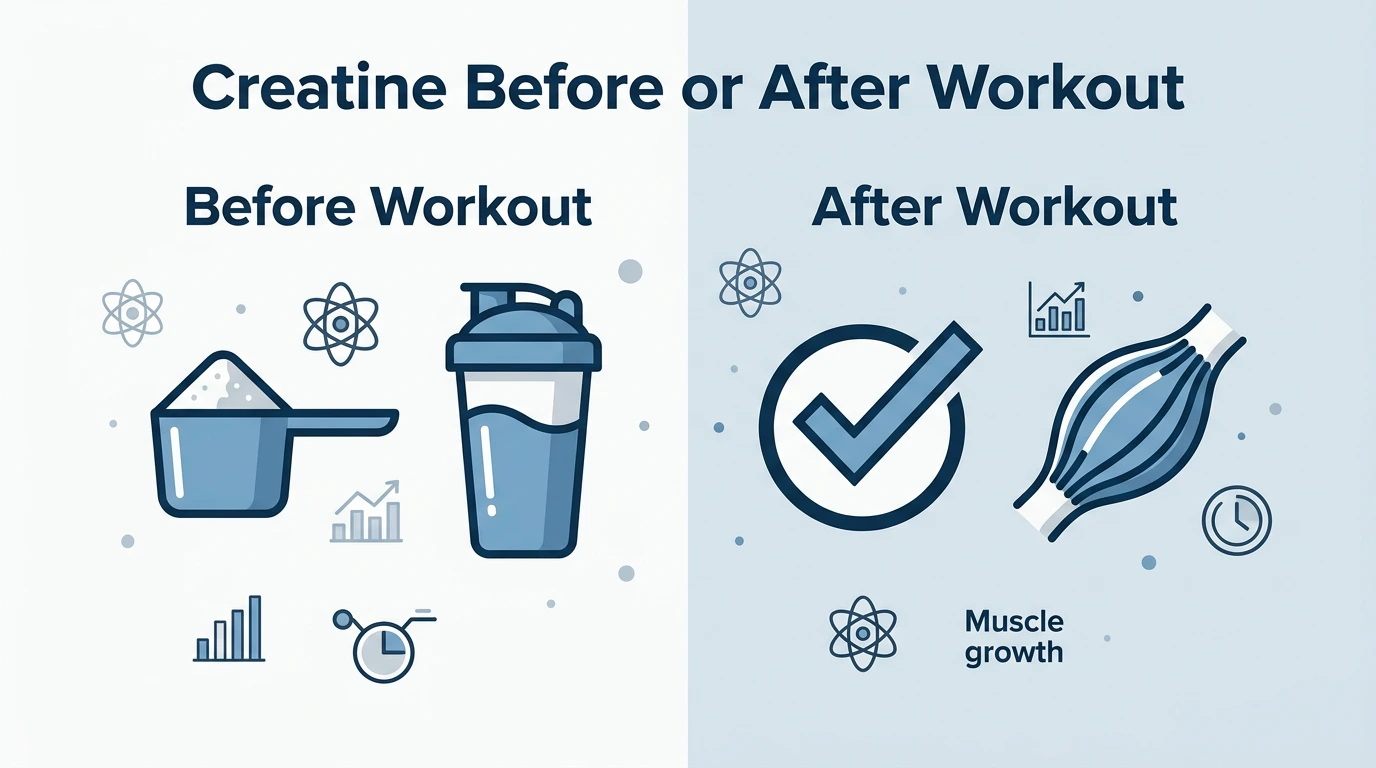
Creatine Before or After Workout: What the Research Says
Let’s talk science — without putting you to sleep.
The Case for Taking Creatine After Your Workout
The most cited study on this topic, published in the Journal of the International Society of Sports Nutrition, compared two groups of recreational bodybuilders. One group took creatine immediately before training, the other immediately after. The post-workout group showed slightly greater increases in lean muscle mass and strength over the five-week study period.
Why might post-workout timing have an edge? A few reasons:
- After training, your muscles are in an insulin-sensitive state — they’re primed to absorb nutrients
- Post-workout meals (typically rich in carbs and protein) cause an insulin spike that may enhance creatine uptake into muscle cells
- Your depleted phosphocreatine stores are actively being replenished, making this a high-demand window for creatine
Think of your muscles after a hard session like a dry sponge. They’re ready to soak up everything you give them — and creatine is no exception.
The Case for Taking Creatine Before Your Workout
Pre-workout creatine has its own logic. The argument here is that having elevated creatine available during your session could directly fuel your performance — more phosphocreatine in the tank means more explosive reps, more power output, and better recovery between sets.
Some athletes also report a psychological benefit to their pre-workout ritual. If creatine is part of that routine, it reinforces consistency — and consistency, as we’ll keep saying, is the real king here.
The honest truth? Pre-workout creatine does work. It’s not wrong. It’s just that the evidence for post-workout timing is slightly stronger.
What About Taking It on an Empty Stomach?
This is where some people run into trouble. Taking creatine on an empty stomach — especially larger doses — can cause nausea or stomach discomfort for some individuals. If you’re taking it pre-workout in a fasted state (like early morning training), consider mixing it into a small snack or shake rather than plain water.

The Honest Answer: Consistency Beats Perfect Timing
Here’s what I wish someone had told me at the beginning: the difference between pre- and post-workout creatine timing is statistically small. The research that favors post-workout timing shows a modest advantage — not a dramatic one.
What matters far more is this:
- Did you take your creatine today?
- Did you take it yesterday?
- Will you take it tomorrow?
If the answer to all three is yes, your timing strategy is already excellent. Creatine saturation is built through daily consistency over 3–4 weeks. Missing doses — regardless of when you take them — is a far bigger mistake than any timing imprecision.
Coach’s Rule: The best time to take creatine is whenever you’ll actually remember to take it every single day.
The Optimal Creatine Timing Strategy (For Real Results)
Now that we’ve set realistic expectations, here’s the practical protocol I recommend — and personally follow.
On Training Days
Take your 3–5 grams of creatine monohydrate immediately post-workout, mixed into your recovery shake or eaten alongside your post-workout meal. This positions you to take advantage of the insulin-sensitive window and aligns with the strongest available research.
Your post-workout meal ideally contains both fast-digesting carbohydrates (to trigger an insulin response) and protein (to support muscle repair). Think: creatine mixed into a banana-and-whey protein shake, or taken alongside rice and chicken.
On Rest Days
Timing on rest days is genuinely irrelevant. Your only job is to take your dose. I personally mix it into my morning coffee (yes, it dissolves fine and you won’t taste it) or toss it into my first meal of the day. Do whatever creates the least friction for you.
Pairing Creatine With Carbs and Protein
This is an underrated tip. Insulin — released in response to carbohydrates — plays a supporting role in driving creatine into muscle tissue. You don’t need to slam sugar to make this work; a normal balanced meal does the job. But taking creatine with a carb-rich meal is meaningfully better than taking it alone in plain water, particularly during the early weeks of supplementation when you’re building saturation.
Common Timing Mistakes Athletes Make
Getting the timing roughly right is easy. But there are a few common mistakes that quietly undermine results — even when athletes are doing everything else correctly.
Taking It Only on Workout Days
This is probably the most common mistake I see. People treat creatine like a pre-workout — something you only use when you’re actually training. But creatine saturation requires daily dosing, including rest days. Skipping non-training days means your muscle creatine levels never fully stabilize, and you’re constantly playing catch-up.
Mixing It With Caffeine (Right Before Training)
There’s ongoing debate about whether high-dose caffeine interferes with creatine’s effectiveness. Some older studies suggested a potential conflict, though the evidence isn’t conclusive at typical pre-workout caffeine levels. Still, if you’re taking a heavy pre-workout supplement loaded with caffeine, it’s worth taking your creatine separately — ideally post-workout — just to be safe.
Inconsistent Dosing Amounts
Some days 3g, some days 7g, some days skipped entirely — this kind of erratic dosing keeps your muscle creatine levels fluctuating instead of building to a stable ceiling. Pick a dose (3–5g is the sweet spot for most people), commit to it daily, and stop changing it.
Overthinking It to the Point of Paralysis
I’ve met athletes who spent more energy debating creatine timing than they spent actually training. Don’t be that person. Pick a time that fits your schedule, stick to it, and redirect that mental energy into your workouts.
Practical Tips You Can Apply Starting Today
- Default to post-workout on training days for the slight scientific edge — mix it into your recovery shake
- Set a daily phone alarm labeled “creatine” until the habit is automatic
- Keep creatine visible — on your kitchen counter, next to your protein powder, or in your gym bag
- Pair it with food whenever possible — the carb-insulin connection is real and easy to leverage
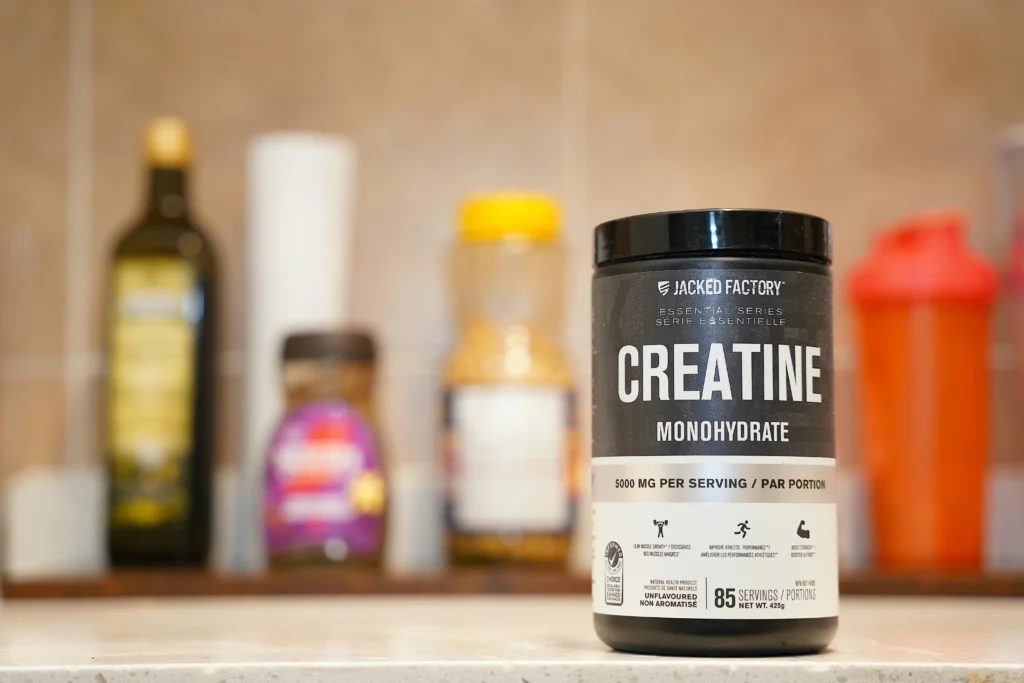
- Use creatine monohydrate — not creatine HCl, not buffered, not effervescent. Plain monohydrate is the most researched and most cost-effective form available
- Stay well hydrated — aim for 2.5–3 liters of water daily, as creatine increases intramuscular water retention
One more thing from personal experience: buy in bulk. A 1kg bag of unflavored creatine monohydrate lasts months and costs a fraction of what fancy branded versions charge. The ingredient is identical. Your muscles don’t read labels.
Frequently Asked Questions
Is it better to take creatine before or after a workout?
The research slightly favors post-workout timing, primarily because your muscles are more insulin-sensitive after training and better positioned to absorb nutrients. That said, the difference is modest — consistency matters far more than whether you take it five minutes before or after your session.
Can I take creatine both before and after a workout?
You can, but there’s no research showing that splitting or doubling your dose around workouts provides extra benefit. Your total daily dose of 3–5g is what drives muscle saturation — when you take it is secondary. Stick to one consistent dose per day unless your doctor or sports dietitian advises otherwise.
What happens if I take creatine on an empty stomach?
Some people experience mild nausea or stomach discomfort when taking creatine without food, especially at higher doses. If this happens to you, always take your creatine with a meal or mixed into a shake with some carbohydrates and protein. This also supports better absorption.
Does creatine timing matter for women?
The core principles apply equally regardless of gender. Post-workout timing with food is the recommended approach for everyone. Women may experience slightly different water retention patterns early in supplementation, but the timing strategy and daily dose remain the same: 3–5g per day, consistently.
How long until I notice results from creatine?
Without a loading phase, expect to notice performance improvements — better endurance between sets, slightly more strength — around the 2–3 week mark, with full saturation and maximum benefit reached at approximately 4 weeks. Results vary depending on training intensity, diet, and individual response.
The Bottom Line on Creatine Timing
After everything we’ve covered, here’s the honest, no-fluff summary: post-workout is the optimal time to take creatine, particularly when paired with a carb-and-protein meal. The science gives it a modest but real edge. If that fits your schedule, make it your default.
But if post-workout doesn’t work for your lifestyle? Take it whenever you will actually take it every day. Before training. With breakfast. Before bed. The timing hierarchy looks like this:
- Every day (non-negotiable)
- With food (strongly preferred)
- Post-workout on training days (optimal if possible)
Creatine is one of the most proven, most affordable, and most underrated tools in any athlete’s supplement stack. You’ve already made the smart choice by using it. Now just take it daily, train hard, and let the compound effect do its work.
Your muscles are waiting. Go feed them. 💪