Magnesium Benefits for Athletes: Unlock Better Recovery, Deeper Sleep, and Stronger Performance
A few years back, I was grinding through a tough training block — hitting the gym five days a week, eating clean, sleeping eight hours — and still feeling like I was running on empty. My legs were perpetually heavy, my sleep was broken and restless, and I kept cramping up mid-session at the worst possible moments. I assumed I was overtraining. My coach assumed I needed a deload week. Turns out, we were both wrong. A simple blood panel revealed I was significantly deficient in one mineral that almost every hard-training athlete overlooks. That mineral was magnesium — and understanding the full scope of magnesium benefits genuinely changed how I train, recover, and feel.
If you’re an athlete pushing your body hard on a regular basis, magnesium isn’t optional. It’s foundational. Yet studies consistently show that a large percentage of active individuals don’t get nearly enough of it — and most don’t even know it. This guide breaks down exactly what magnesium does, why athletes need more of it than the average person, and how to make sure you’re getting enough to perform at your best.
Table of Contents
What Is Magnesium and Why Do Athletes Need More of It?
Magnesium is the fourth most abundant mineral in the human body and is involved in over 300 enzymatic reactions — including energy production, protein synthesis, muscle contraction, nerve function, and DNA repair. Basically, if something important is happening in your body, magnesium is probably involved.
Here’s the athlete-specific problem: physical activity dramatically accelerates magnesium depletion. Every time you sweat, you lose magnesium. Every time your muscles contract and release — which happens thousands of times per training session — magnesium is being used. High-intensity exercise also increases urinary magnesium excretion, meaning your kidneys flush out more of it when you’re working hard.
The result? Athletes have significantly higher magnesium requirements than sedentary individuals, yet they’re often consuming the same (or less) dietary magnesium. That gap is where performance suffers, recovery slows, and those frustrating symptoms — cramps, fatigue, poor sleep, brain fog — start showing up.
Key Fact: Research suggests that up to 57% of Americans don’t meet the recommended daily intake for magnesium — and that number is likely higher among hard-training athletes due to sweat and exercise-induced losses.

The Top Magnesium Benefits for Athletic Performance
Let’s get into the specifics — because magnesium doesn’t just do one thing. It does everything. Here are the benefits that matter most if you’re serious about your training.
1. Reduces Muscle Cramps and Spasms
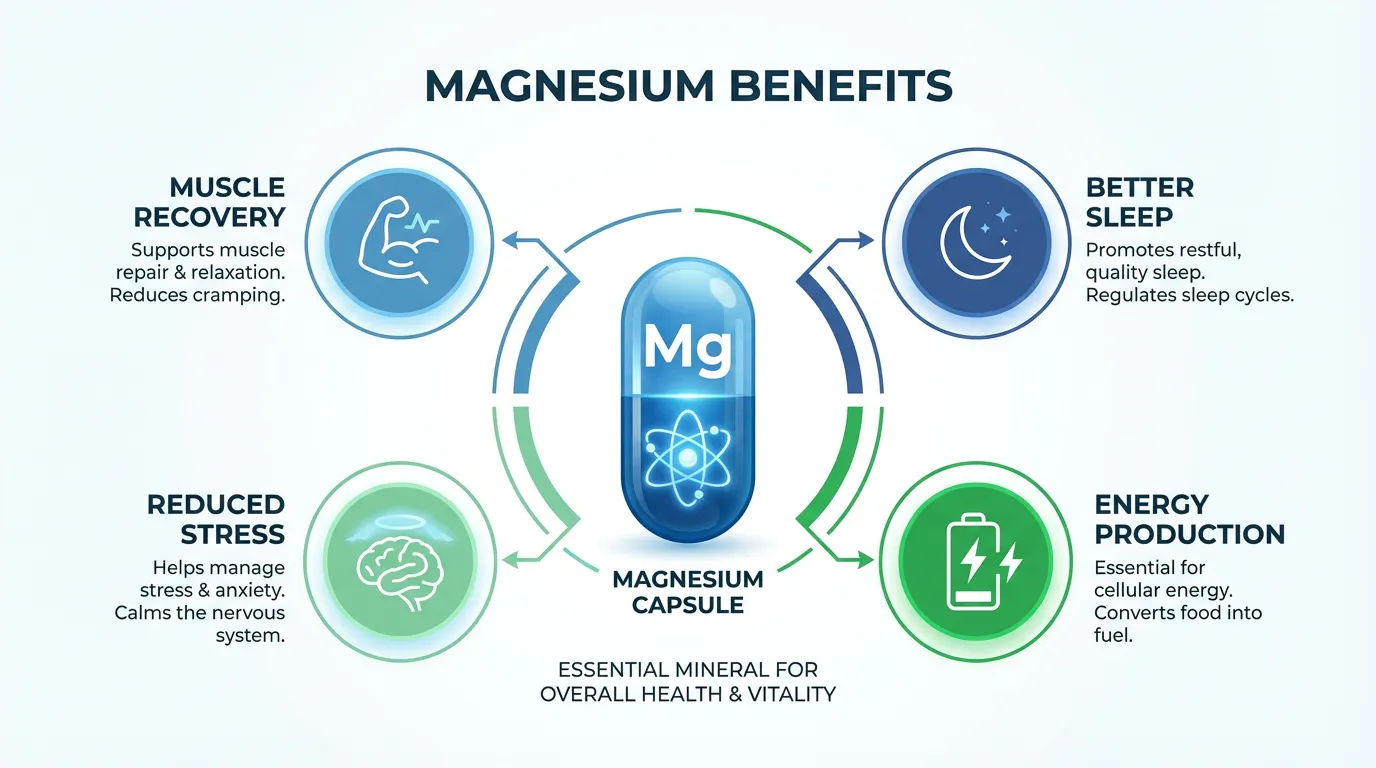
This is the benefit most athletes have at least heard of — and it’s 100% real. Magnesium plays a direct role in regulating muscle contraction by counterbalancing calcium. Calcium triggers muscle contractions; magnesium triggers relaxation. When magnesium levels drop, this balance is disrupted and muscles can’t fully release — leading to the cramps, twitches, and spasms that derail workouts and wake you up at 3am with a charley horse.
If you’re cramping regularly despite adequate hydration and sodium intake, low magnesium is the first place to look.
2. Supports Energy Production at the Cellular Level
Every cell in your body produces energy through a molecule called ATP (adenosine triphosphate). Here’s something most athletes don’t know: ATP must be bound to magnesium to be biologically active. Without sufficient magnesium, your cells can’t efficiently produce or use energy — no matter how many carbs you eat or how optimized your training is.
This is why magnesium deficiency often feels like chronic fatigue that rest doesn’t fix. It’s not just tiredness — it’s an energy production problem happening at the cellular level.
3. Improves Sleep Quality and Recovery
Sleep is where the real gains happen, and magnesium is deeply tied to sleep quality. It activates the parasympathetic nervous system — your body’s “rest and digest” mode — and regulates neurotransmitters like GABA that quiet the brain and prepare you for deep, restorative sleep.
I noticed this personally within a week of fixing my magnesium levels. I wasn’t just sleeping longer — I was sleeping deeper. I woke up feeling actually recovered, not just rested. For athletes doing heavy training blocks, that difference in sleep quality translates directly into better performance and faster muscle repair.
4. Reduces Inflammation and Supports Recovery
Hard training creates inflammation — that’s normal and necessary for adaptation. But chronic, unresolved inflammation slows recovery, increases injury risk, and over time, leads to burnout. Magnesium has well-documented anti-inflammatory properties, helping regulate the body’s inflammatory response and supporting faster recovery between sessions.
Athletes who supplement with magnesium often report less soreness after hard sessions — not because the muscle damage isn’t happening, but because their bodies are managing the inflammatory response more efficiently.
5. Supports Bone Density and Joint Health
Everyone focuses on calcium for bones, and calcium matters — but magnesium is what helps your body actually absorb and use calcium properly. Roughly 60% of the body’s magnesium is stored in bone tissue, and adequate levels are critical for maintaining bone density, especially in endurance athletes and those with high training volumes who are at elevated risk for stress fractures.
6. Regulates Cortisol and Stress Response
Training is stress — productive stress, but stress nonetheless. Your body responds to both physical and mental stress by releasing cortisol, the primary stress hormone. Chronically elevated cortisol breaks down muscle tissue, suppresses immune function, and tanks your testosterone levels.
Magnesium helps modulate the HPA axis (your body’s stress response system), keeping cortisol from spiraling out of control after intense training. Think of it as a natural buffer between you and the hormonal fallout of hard work.
7. Enhances Protein Synthesis and Muscle Growth
If building muscle is your goal, here’s a fact worth knowing: magnesium is directly involved in ribosomal protein synthesis — the biological process through which your body assembles new muscle proteins. Without adequate magnesium, your body can’t efficiently use the protein you’re eating. All those chicken breasts and protein shakes are only as effective as the enzymatic processes that convert them into muscle — and magnesium sits at the center of that process.
How to Get More Magnesium: Food vs. Supplements
The best place to start is always food. Whole food sources of magnesium come packaged with co-factors that improve absorption and work synergistically with other nutrients in ways supplements can’t fully replicate.
Top Food Sources of Magnesium

- Dark leafy greens — spinach, Swiss chard, kale (one cup of cooked spinach delivers ~157mg)
- Pumpkin seeds — one of the most concentrated sources available (~168mg per ounce)
- Dark chocolate (70%+ cacao) — yes, really (~65mg per ounce)
- Legumes — black beans, lentils, chickpeas
- Whole grains — quinoa, brown rice, oats
- Nuts — almonds, cashews, Brazil nuts
- Fatty fish — salmon, mackerel, halibut
- Avocado — a medium avocado delivers roughly 58mg
The challenge for most athletes is that even with a clean, whole-food diet, hitting the elevated magnesium requirements that come with consistent hard training is genuinely difficult through food alone.
When to Consider Magnesium Supplements

If you’re training hard four or more days per week, sweating heavily, or regularly dealing with cramps, disrupted sleep, or unexplained fatigue, supplementing with magnesium is worth serious consideration. The general recommended intake for active adults is 310–420mg per day, but many sports nutrition experts suggest athletes may benefit from up to 500mg depending on training volume and sweat losses.
Choosing the Right Form of Magnesium
Not all magnesium supplements are equal. The form matters significantly for absorption and tolerability:
- Magnesium glycinate — best overall for athletes; highly bioavailable, gentle on the stomach, excellent for sleep and recovery
- Magnesium malate — great for energy and muscle function; pairs well with training days
- Magnesium citrate — well absorbed, widely available, affordable; can have a mild laxative effect at high doses
- Magnesium oxide — cheap and common, but poorly absorbed; not recommended if you’re supplementing for performance reasons
My personal go-to is magnesium glycinate taken about an hour before bed. The sleep improvement alone was noticeable within days, and it’s one of the easiest supplements I’ve ever added to my routine.
Common Mistakes Athletes Make With Magnesium
Relying on a Multivitamin
Most multivitamins contain magnesium oxide — the poorly absorbed form — at doses far below what active individuals need. If magnesium is a priority for you, a dedicated supplement is far more effective than hoping your multi covers it.
Taking It With Calcium Supplements
Calcium and magnesium compete for absorption in the gut. If you’re taking both, separate them by at least two hours to ensure you’re actually absorbing meaningful amounts of each. Taking a combined calcium-magnesium supplement can reduce the effectiveness of both.
Ignoring Vitamin D’s Role
Vitamin D and magnesium have a codependent relationship — magnesium is required to convert vitamin D into its active form, and vitamin D helps regulate magnesium absorption. If you’re deficient in both (common in athletes training indoors), fixing one without the other limits your results. Address them together.
Expecting Instant Results
Correcting a magnesium deficiency takes time. If you’ve been low for months, expect 4–8 weeks of consistent supplementation before you fully notice the difference in sleep, energy, and cramp frequency. Be patient and stay consistent.
Practical Magnesium Tips to Apply Right Now
- Add pumpkin seeds to your daily diet — sprinkle them on oatmeal, salads, or eat them as a snack. One ounce covers roughly 40% of your daily magnesium needs
- Take magnesium glycinate 60 minutes before bed — start with 200–300mg and adjust based on how you feel
- Eat more leafy greens with every dinner — a side of sautéed spinach is one of the easiest magnesium upgrades you can make
- Track your intake for one week using a nutrition app — most athletes are shocked to discover how far below the recommended amount they actually fall
- If you’re getting blood work done, ask for a magnesium test — standard panels don’t always include it, but knowing your baseline is invaluable
- Stay hydrated — dehydration worsens magnesium loss, so your hydration habits and magnesium levels are directly connected
Frequently Asked Questions
What are the signs of magnesium deficiency in athletes?
The most common signs include frequent muscle cramps and spasms, persistent fatigue that doesn’t improve with rest, poor or fragmented sleep, increased anxiety or irritability, weakness during training, and slower recovery between sessions. These symptoms are easy to dismiss as overtraining — which is why magnesium deficiency often goes undiagnosed for months.
How much magnesium should an athlete take per day?
The standard recommended dietary allowance (RDA) is 310–420mg per day for adults, but active athletes — especially those training intensely four or more days per week — often benefit from 400–500mg daily to account for sweat and exercise-induced losses. Always start at the lower end and adjust based on your body’s response.
Is it safe to take magnesium every day?
Yes, daily magnesium supplementation is considered safe for most healthy individuals at standard doses. Excessive doses (generally above 700mg/day from supplements) can cause digestive issues including loose stools. Stick to recommended amounts, prioritize food sources, and if you have kidney disease or other medical conditions, consult your doctor before supplementing.
When is the best time to take magnesium for athletes?
For most athletes, 30–60 minutes before bed is the ideal time. This supports the sleep-promoting and nervous system calming effects of magnesium, maximizing its recovery benefits during the hours when your body does the most repair work. On heavy training days, some athletes also take a smaller dose with their post-workout meal to support muscle recovery.
Does magnesium help with anxiety and mental performance?
Yes — and this is an underappreciated benefit for competitive athletes. Magnesium regulates the NMDA receptor system and supports GABA activity in the brain, both of which play roles in managing anxiety and stress responses. Athletes dealing with pre-competition nerves or high-pressure training environments often report a noticeable calming effect from adequate magnesium intake. It won’t sedate you — it simply helps your nervous system find its natural equilibrium.
Final Thoughts: The Mineral That Does Everything
If there’s one takeaway from everything we’ve covered, it’s this: magnesium isn’t a niche supplement for people with health problems. It’s a foundational mineral that every hard-training athlete needs in adequate supply — and most aren’t getting enough of it.
The magnesium benefits stack up fast: fewer cramps, deeper sleep, faster recovery, better energy, reduced inflammation, stronger bones, and more efficient muscle growth. These aren’t marginal gains. For an athlete already doing the hard work in the gym and kitchen, fixing a magnesium deficiency can feel like unlocking a level you didn’t know existed.
Start with food. Add pumpkin seeds, eat your leafy greens, include more whole grains. Then assess honestly whether your training demands more than diet alone can provide — and if they do, magnesium glycinate before bed is one of the simplest, most impactful additions you can make to your supplement stack.
You’re already putting in the work. Make sure your body has what it needs to turn that work into results.
Go get your magnesium sorted. Your muscles, your sleep, and your next Personal Record will thank you. 💪
Check out our complete guide on creatine here.